
 The following was adapted from a post by my good friend, Bill Mann, who writes and speaks on the important topic of inter-generational mentoring. - Jolene Erlacher Greater love hath no man than this, that a man lay down his life for his friends. John 15:13. Over 60 years ago, my mother told me that you can count your real friends on one hand. I didn’t appreciate her wisdom for a long time, but it’s pretty accurate based on my own experience. And now studies show exactly that: five is the magic number. Of all the things in life that are underrated, I think forming a deep friendship with another person is high on the list. I’ve written posts on how to choose friends, the value of friends and even what real friends do for one another. C.S. Lewis even commented on the need for friends: “The safest road to hell is the gradual one . . . the gentle slope, soft underfoot, without sudden turnings, without milestones, without signposts. This is why it’s so dangerous to do life alone.” Smartphones burst on the scene with the introduction of the iPhone in 2007. After 12 years, we are now getting a look at what havoc it has caused to our relationships. Not surprising (to me, anyway), there has been a decline in true friendships in the past decade. A recent study showed that social media has made most people’s friendships superficial and shallow. Another study of 3,000 adults concurred. High social media use affected both the quantity and quality of friendships. It turns out that our brain limits us as to the number of friends we can digest. The number is 150, including family, according to R.I.M. Dunbar, a Psychologist at the University of Oxford. To have true connection with your closest five, you need to spend time connecting at least once a week. That takes time, which is another limit on relationships. If you love someone or are married, the number drops to 4. For the next 15, you need to connect at least once every month, and once a year for the rest of the 150. Interesting stuff. The takeaway is that the more your spend time on a relationship, the stronger it becomes. Social media doesn’t increase our capacity for friends, and the number stays at 150. While getting “likes” is gratifying, it doesn’t replace face-to-face conversation. In other words, if you have more than 150 “friends” on social media, the number above 150 is meaningless. They are just acquaintances. They are not your friends. Connecting means some kind of back and forth conversation which takes time. Fast forward to today where WhatsApp, Snapchat, texting, Instagram and Facebook have become platforms for interpersonal communication. Jean Twenge, who has researched this area, has noted that FOMO and increased use of social media has resulted in less time hanging out with friends. The result: increased loneliness and isolation. The next generation (18-34) spends upwards of 43% of their digital use on apps, and adults in general spend over half their day interacting with media. For the next generation, that’s 8 hours a day. But what is it getting them? Shallower relationships, superficial friends and often loneliness and depression. Certainly not a friend willing to lay down his life for them. A friend of mine went through a tough patch in his life. He did some pretty bad things which caught up to him. I spent time with him in the aftermath. I told him that the good news was that he would really find out who his real friends were. Those who were shallow would distance themselves and abandon him. He later came to me and said: “You were right; I now know which friends I can count on.” This morning, I chatted with a friend, Steve Noble, who has started meeting with some from the next generation. He asked them a couple of questions. The answers didn’t surprise me. None of them had a close friend that they felt they could call on in need, and none of them ever connected in any meaningful way with someone older. In a challenging article in Christianity Today, Jen Thorn describes the 6 costs of real friendship: Time, personal convenience, intimacy, comfort, love and prayer. This is a biblical view of what real friends do for each other. Lest I forget, every study I’ve seen reports that those who have close friendships tend to be happier in life. Nuff said. I’ve had the good fortune to have close friends, but it has taken effort and intentionality. I’ve met with 2 other men for over 25 years weekly, and we share life together. Proverbs tells us to seek wise counsel, and we have provided each other with invaluable support, direction and feedback through the years. I count my group as a peer mentor group, although we never gave it that label. The challenge here is that the next generation is missing out by not having real friends. They need someone to come alongside and help them understand the importance of friends in their life. Real friends are the people who stick by you in the good times and the bad. MENTOR TAKEAWAY: In your interaction with your mentee, find out who his friends are (or aren’t), and encourage him to develop close relationships. It may be the best advice you can give him. Read the full post by Bill Mann at his blog.
1 Comment
 Research continues to link the overuse of technology to depression, attention issues, and poor social skills. Many parents and grandparents I talk to feel overwhelmed by the powerful influence of technology in their families and homes. Technology, if not managed, can impair our family's wellbeing. One of our best defenses against devices controlling our time and relationships is to develop a culture in our homes that encourages healthy technology use. So, how do we go about inspiring a tech-smart family? Here are a few strategies and resources: So, how do we go about inspiring a tech-smart family? Here are a few strategies and resources:
Book Jolene to speak to your church, school, or community group on Tech-Smart Parenting or visit the Leading Tomorrow podcast for more on this and related topics!  A recent study revealed that 18 to 22-year-olds are the loneliest age group today. There are a variety of factors that contribute to this troubling statistic. One, of course, is the prevalent use of technology in our society today. While devices help us connect to people in new and beneficial ways, there are some drawbacks. Empathy, for example, has decreased as technology has increased. One study reported that college students are 40 percent less empathetic than they were 20 or 30 years ago, prior to the widespread use of the internet. Screens dull our ability to feel the pain and joy of others and to connect with them emotionally. This presents a threat to deep, committed relationships that are impossible to maintain without continuing empathetic interaction.
While Millennials and Generation Z are especially adept at communicating online, valuable intimacy often gets lost in virtual communications. Quantified Communications reports that an average adult today makes eye contact between 30 and 60 percent of the time in conversation, but emotional connection is built when eye contact is made during 60 to 70 percent of the conversation. When there is less eye contact, fewer connections are made. Virtual connections, while valuable, cannot replace the emotional connection and sense of well being that occurs with eye contact, touch, and physical presence. Leaders and managers today often report that young staff lack the relational skills and emotional intelligence to connect with others effectively. In many ways, it is the older generations who must take responsibility for this. When we hand a 5-year-old a device instead of answering their tenth question about giraffes or princesses, we rob them of an opportunity to develop face-to-face communication skills and connect with us in a way that is meaningful to them. When we miss the body language or facial expressions of a 10 or 12-year-old in our life because we are busy checking our social media feed, we lose the opportunity to model good emotional intelligence. When we avoid a conversation with an 18 or 20-year-old in our life because we assume their earbuds mean they don’t want to talk to us, or we fear rejection, we miss an opportunity to demonstrate sincere interest or unconditional love. Young people today need opportunities to practice healthy relational skills, and they desperately need to see them modeled. Many leaders, mentors, teachers and parents I talk to, however, do not know even where to start in actively engaging the young people in their lives. What I have found, in interacting regularly with 5 to 25-year-olds, is that there is great power in a good question and active listening. I have yet to encounter a young person who did not respond positively to someone sincerely asking about their perspectives and concerns. True, there might be an eye roll or two at first, but when they see you persist in your interest in them, despite their eye roll, trust and respect begin to develop. So, what does a good question entail? First of all, it must be open-ended. If it allows the young person to respond with a simple “yes,” “no,” “good” or “bad,” a grunt or sigh, it is not a good question. Instead, it should require some thoughtfulness. Instead of asking, “Did you have a good day at school?” try something like “What was the best part of your day at school?” The response to a good question should give you some insight into the young person’s life and provide an opportunity for a follow up question. For example, if they respond that the best part of their day was chatting with a friend, you could follow up with a question like, “Tell me about your friend? How did you meet?” A good question can thus communicate that you care about what they care about. Check out some other great sample questions here. Good questions are one of the most powerful ways to demonstrate interest, gain empathy, and develop deep connections. As a result, they are a critical tool for all of us as we interact in a society that is increasingly distracted and busy. Make it a goal to practice asking good questions and taking the time to listen actively to the responses. 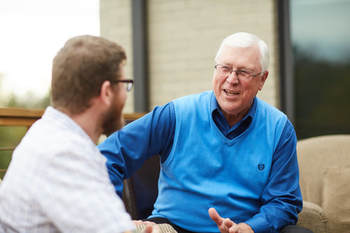 As a sophomore in college, I served as a student leader. Our team was responsible for providing peer mentoring, planning student programs, and helping with various campus activities. We were volunteers, with leadership responsibilities piled on top of classes, homework, and part-time jobs. It was important for us to stay focused on the goal. One of our team leaders often encouraged us by saying, “It’s all about the one!” It didn’t matter if attendance at an event was low, if one lonely student came and found community and new friends, it was worth it. If we had a test looming the next day, but a student struggling with depression showed up at our door, giving up some sleep and taking time to encourage her was meaningful. That slogan helped keep us focused on how critical investing in just one person can be!
Our culture is obsessed with numbers as indicators of success. We measure success as the amount in the budget; the number of customers, guests, sales or conversions; or the size of our facilities. While there are great reasons for this, it can also be a distraction. I am often asked how to create a successful leadership development or ministry program for youth and young adults. Mass methods are only marginally effective. The best way to engage with and develop a young person is one-on-one, or in small teams and communities. Millennials and Generation Z have access to information unlike any other generation in the history of the world. They don’t need another great program; they need to process. Indeed, the number one predictor of a young person retaining their faith is a meaningful relationship with an older believer. Trusted mentors and friends and safe spaces in the frenzied worlds of youth today can provide opportunities for the development of strong values and convictions. I call this period that we are in the “season of a remnant.” Regardless of your setting, it is unlikely that we will accomplish significant change or impact in young lives and perspectives through large group trainings, conferences, or classes. Relationships, community and meaningful conversation are where the most formative experiences occur. Wondering why a young people has a specific political view? Engage them in a conversation (not a lecture!) about it. Wanting to instill an essential character trait or leadership quality in a young mentee? Model it for them, inviting them to share in a meaningful leadership experience. Hoping to share faith or truth with a generation that desperately needs it? Begin with “the one” or a few…a remnant. Will and Ariel Durant, Pulitzer-prize winning historians, in discussing the inevitable decline of civilizations, write the following: “Nations die. Old regions grow arid, or suffer other change. Resilient man picks up his tools and his arts, and moves on, taking his memories with him.” I often reflect on this statement and think about my students and my children, their children and grandchildren. As the civilization we belong to undergoes change, what tools and memories do we want young people to possess as they move on to a new or changed civilization? What tools do we want to ensure they carry with them into an uncertain future? There will always be a resilient remnant and equipping them means we sometimes have to remain focused on “the one!”  I have taught leadership courses for many years. It always amazes me to read student essays on who has greatly influenced them. Most of the time, they write about family or friends. These influential people are seldom rich, famous, or powerful. They sometimes live far away or are seen infrequently. To read students’ writing about grandparents, aunts, uncles or friends who have greatly impacted them, I am reminded of the importance of our relationships with family and friends. The holidays is a time of the year when we often see people who live far away or are busy other times of the year. As a result, interactions during Christmas gatherings can be awkward, forced or uncomfortable at times. If there is dysfunction or hurt in the family, it makes it even more difficult to have meaningful conversations. Nonetheless, these events provide invaluable opportunities to mentor and encourage. Our attitudes, behaviors, and responses influence and communicate regardless of our intent, especially to kids, youth, and young adults in our family circles. So, as we begin this season of celebration, here are a few tips to remember as we seek meaningful interactions this Christmas.
|
AuthorDr. Jolene Erlacher is a wife, mommy, author, speaker, college instructor and coffee drinker who is passionate about empowering the next generation of leaders for effective service! Archives
April 2024
Categories
All
|
 RSS Feed